
Thinking about Urban Landscapes?
On the 27th June I (Roger Johnson) and John Whittle (aka Chairman of Oxford Photomarathon), as members of Abingdon Camera Club, will lead a photo walk in Abingdon on the theme of ‘Urban Landscapes’ (tickets on Eventbrite). We are all amateur photographers, and we are expecting absolute beginners through to very experienced photographers to join us for the walk. On pondering our opening spiel to welcome fellow photo-walkers, give a little starting advice, and warm up our creativity, I thought; what questions would I ask myself when photographing an urban landscape? This is what I came up with:
What have I just photographed? Try to capture elements of any man-made development that creates an urban environment. Trading estates, roundabouts, chimneys, warehouses, shops, light industry, heavy industry… the list goes on… can all provide subject matter in this genre. You can also seek out man-made alterations to an otherwise natural environment, no matter how large or small. The edge of a sprawling housing development, a shopping trolley dumped in a hedgerow, and new road-building project may all provide interest. Just be careful, photographing the above will inevitably bring you close to private land and grumpy security guards.
Why did I photograph that? Yes. Good question. Why did I just photograph a shopping trolley dumped in a hedgerow? Well, because I want to tell a story. Does your picture have immediate impact and meaning? Or will the viewer rely on context to find meaning, and if so, have you adequately captured the context? Is the image intended to be literal or abstract? Is the urban environment you have photographed successful and in a state of prosperity, or is it failing and in decline? What role do people have in your urban landscape? Are urban and natural environments juxtaposed or competing? Has the strength of urban building and infrastructure won over nature, or is nature fighting back (and winning)? Are the two now symbiotic? These are all interesting questions to ask of an image, and of course there are many more. If seen well, your picture can tell a powerful story about a part of urban living that most of us are familiar with (but perhaps forget). This alone can make the picture immersive, just as a good nature landscape does.
Do I like the image? This is all that really matters. This genre especially invites challenging ‘marmite’ images, in striking contrast to generically appealing natural landscape photographs. Do you see aesthetic beauty in your picture? Does the image resonate with you? If so, you have taken a great photograph! However, some viewers might not appreciate or understand the photograph you have taken, but if it resonates strongly with you, it may well resonate strongly with someone else, and that’s the icing on the cake!
Have I nailed my technique? The usual rules for landscape photography apply. Composition. Think about dividing the frame, using the rule of thirds to position a lamp post perhaps. Be careful to separate objects by moving slightly to the left or to the right. You could use a different perspective to tell your story, getting close to the ground or working from an elevated position. Always use a large depth of field so that everything in the image is in focus. Consider then what constitutes the foreground (a road cone?), midground, and background, and try to introduce interest throughout these layers, ideally moving the viewers eye around the image towards a singular focal point where the eye can rest. Leading lines are abundant in the urban landscape, where they can be found in kerbs, paths, roof lines, long shadows etc… these can really help your composition. Just like natural landscapes, the golden hours are the best time to photograph the urban landscape, using the light from the sun to enhance the graphic quality of the scene. And finally, despite all of that, never be afraid to break the rules…
In conclusion, I have attached a couple of my urban landscape photographs for you to think about, perhaps in reference to what is written above. Here’s my entirely subjective thoughts:
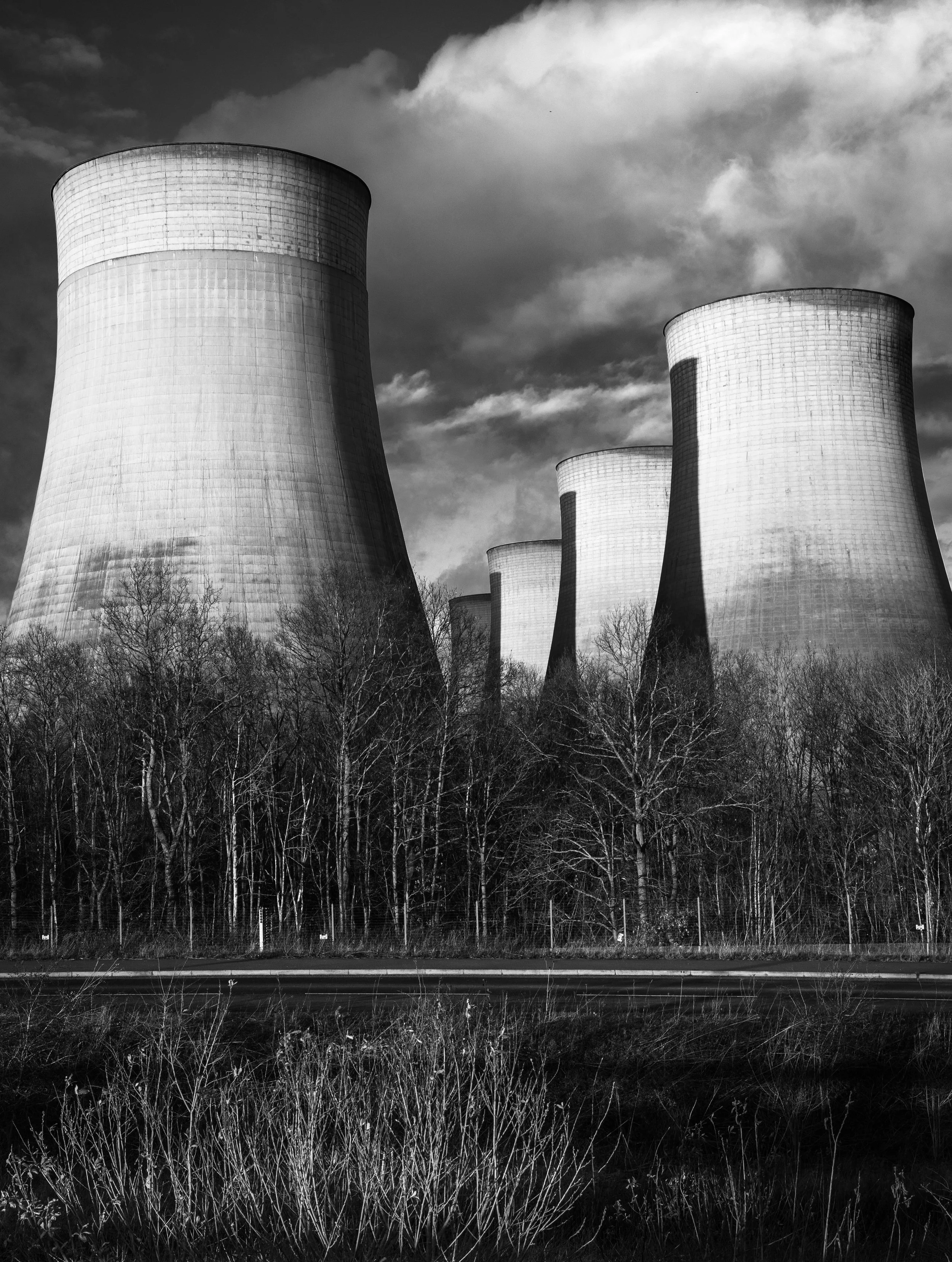
‘If Adams did power stations’
(Please forgive the rather cheeky reference to one of landscape photography’s greats!) is a more conventional landscape photograph with a literal subject matter. The scene has been photographed in gorgeous low light, giving lovely shadows on the beautiful man-made (or natural?) forms of the cooling towers. The image is supported by a stunning sky that mimics steam from the now disused cooling towers (the clear patch of sky in the top left helps with this). There is a stark foreground of highlighted twiggy vegetation and patterned (man-made?) shadows, separated from the midground by a highlighted roadside kerb. The towers then give depth well into the background. Repeating man-made patterns (spot the fence posts?) occur amid the ordered chaos of nature which survives, but feels compromised.
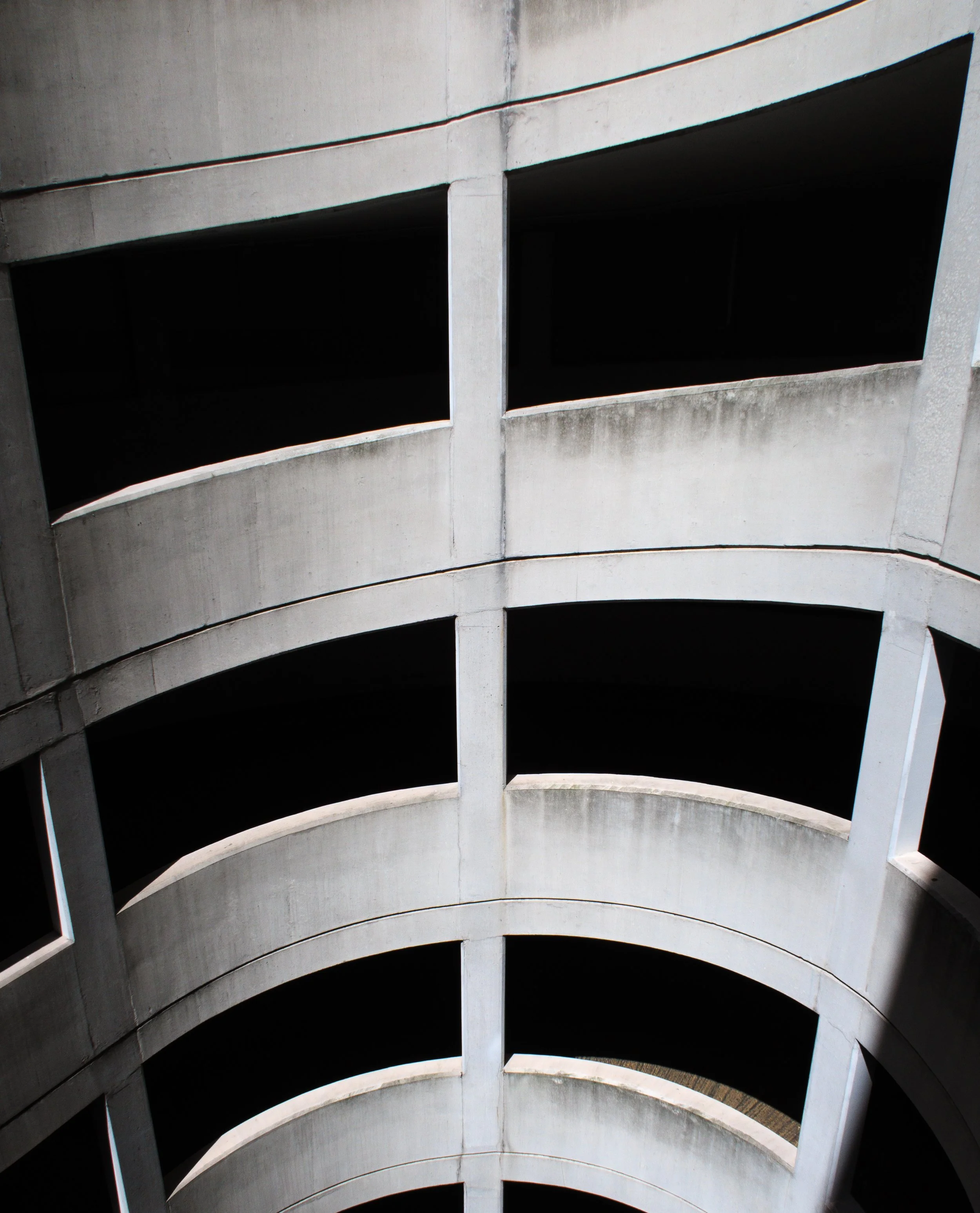
‘Parking nightmare’
I will say less about this, as it is intended to be more abstract to leave more for the viewer to engage with. I love the man-made shapes cut out by the deep blacks, distorted to give a welcome diagonal across the picture, and framed by concrete expressing a lovely tonal range of dirt. The highlights bring additional form to the building, and the whole scene wraps around the viewer in an emotive manner. It is a colour image, and needs to be, and the small wedge of brown towards the bottom right disrupts the patterns and brings intrigue to the forms. Finally, it all seems rather menacing to me… shudder.